
Compare the Franklin County Property Value Numbers
One parcel can carry several sound figures, because each answers a different question. The Franklin County Tax Assessor/Collector locates, classifies, and assesses taxable property every year. A deed records a transfer. The assessment roll supports taxation. Read the label and the year. Then compare any two numbers from property records.
| Value | What It Is | Where |
|---|---|---|
| True value | The assessor's estimate before the statutory class ratio | Assessment record |
| Assessed value | True value multiplied by the Mississippi class ratio | Assessment roll |
| Taxable value | The figure affected by applicable exemptions | Tax record |
| Sale consideration | The amount or terms associated with a recorded transfer | Deed and, when available, parcel history |
Owner-occupied single-family residential real property falls in Class I. It is assessed at 10 percent of true value. Other real property generally lands in Class II at 15 percent. That statutory conversion is why assessed value is not a likely sale price. Millage applies later to compute the tax bill. That step belongs on the Franklin County property tax page.
Class Ratios Shape Each Franklin County Property Value
Classification drives the whole state formula. The Mississippi Department of Revenue property-appraisal guidance supplies the Class I and Class II ratios used locally. Two parcels with the same true value but different legal classes can end up with different assessed values before any exemption or millage enters the picture.
Keep the units straight. A 10 percent assessment ratio does not mean the property lost 90 percent of its market worth. It converts true value into the tax assessment base.
Confirm the class listed for the parcel rather than guessing from how the street looks. If the online record is unclear, ask the county office.
Franklin County Updates Its Assessment Roll Each Year
The assessor keeps ownership maps and records. The rolls are updated annually, and the assessor presents them to the Board of Supervisors before its July meeting. A Franklin County property value therefore belongs to a particular roll year. It may not reflect a change that occurred after the working data was prepared.
The county publishes no Franklin County-only revaluation year. It publishes no city-specific appreciation rate, so avoid filling that gap with a broad market estimate. Compare like years instead. Confirm the property class. Ask the assessor when a material change was entered on the tax roll.
Note: Annual roll maintenance gives the assessment a time stamp, but it does not turn the figure into a current private appraisal.
A Franklin County Property Value Splits Land and Improvements
A complete parcel card should separate land, improvement, and total figures. That split helps explain why a value changed after construction, demolition, or a land adjustment. Treat those fields as items to confirm on the current record. Do not treat them as assumptions about any search result. The Franklin County assessor owner search is the intended route. It leads to the value record for a parcel.
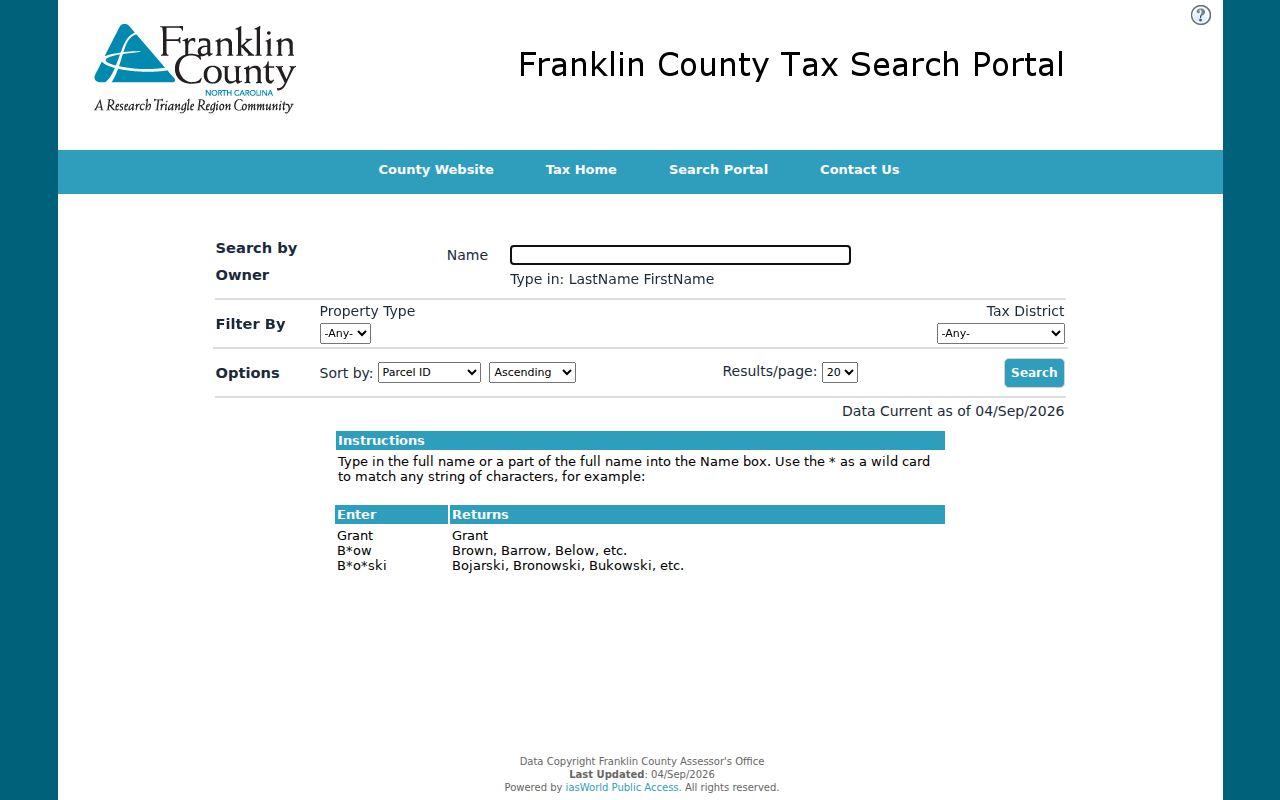
The search page itself shows entry fields, not a sample value. So each live result field and year still requires direct confirmation on the record. Legal description and parcel ID provide the cross-check. A mailing address can belong to the taxpayer while the situs describes the taxed property. If a property search returns several similar addresses, match the parcel number. Then match the description before recording the value.
Find a Franklin County Property Value on the Tax Portal
The Franklin County Tax property search offers owner, address, parcel-number, advanced, tax-bill, and map modes. Its landing page carries a data date marker. Use the date shown when you search, since a later live session may differ.
- Open the address mode and enter the house number and street name, leaving the suffix flexible if needed.
- Match the parcel ID, situs, and legal description rather than relying on the address alone.
- Record the tax year, property class, true value, assessed value, and land/improvement split that the live card displays.
- Use the most recent recorded deed if sale consideration is needed as a separate reference point.
- True value
- The assessor's full-value estimate used before classification.
- Assessed value
- The class-adjusted base produced under state law.
- Assessment ratio
- The percentage assigned to the property's legal class.
Address Search Formatting Can Change the Result
Franklin's address form separates House Number, Pre-Direction, Street Name, and Street Type. The portal's own examples include 819 Woodland, *woodland, and *woodland dr. A street-name search without a house number can return the whole street. That is handy. It shows whether the target address carries an unexpected suffix.
When address mode fails, carry the parcel ID into parcel-number mode. That form accepts all or part of an identifier. It also supports wildcard patterns. This method reduces the risk of pulling the value of a similarly named road. It also avoids confusing a postal address with the actual situs on the tax roll.
Recorded Sale Consideration Is a Different Franklin County Figure
A recorded deed can provide a transfer date. It can also show the parties, a legal description, and a consideration clue. It answers what the recorded transaction says, not what the assessor believes the parcel is worth now. Family transfers, quitclaims, estate conveyances, and distressed sales may not work as open-market comparisons.
The Franklin County Chancery Clerk keeps deeds, deeds of trust, substitutions, plats, liens, judgments, and related land records. The vendor index carries subscription language. The clerk publishes no reliable public online deed index. For a sale figure that is absent or unclear online, contact the clerk at 36 Main Street in Meadville or 601-384-2330.
Note: A deed's consideration and an assessor's value can both be correct because they describe different events and dates.
Homestead Changes Franklin County Property Value Tax Treatment
Homestead applications in Franklin County open on January 1 and close on April 1. The county offers regular and special homestead benefits. Special rules cover owners who turned 65 before January 1 or who are fully disabled. These benefits shape how a parcel is taxed, and nothing more. They say nothing about what a buyer would actually pay for the property.
Certain life events require a fresh application. Death, marriage, divorce, or selling part of the land can all change eligibility. When checking the assessor's figures, read the exemption field. Match it to the same tax year as the value shown. Questions about eligibility? Rely on the assessor's current record for the exact amount applied. Skip the old parcel printout.
A Tax-Sale Notice Is Not a Franklin County Comparable Sale
A 2025 Franklin Advocate land-redemption notice lists parcel numbers, PPINs, legal descriptions, and subdivisions. It also includes Bude or Meadville addresses. Those identifiers are handy for pinning down a hard-to-find parcel. But a tax sale is not a market deal. It grows out of delinquency and redemption law rather than an ordinary negotiated deal between a willing buyer and seller.
Treat the notice as an identification trail instead. Copy the parcel number and note the subdivision or section-township-range description. Then open the assessment record from there. Never lean on a tax-sale amount alone to estimate property value.
Franklin County GIS Adds Property Value Context
The Franklin County GIS viewer puts several tools in one place. Look for Layers, Sales, Owner Parcel Export, District Lookup, measurement, coordinates, township-range-section search, and printing. Together they establish location, nearby parcels, districts, and broader map context. A sales point on the map is still just a starting point. Confirm it against the recorded instrument and the assessment year.
The viewer serves reference purposes only. It cannot settle a legal boundary or certify a value. Bring in a survey for boundary questions. And get a qualified appraisal whenever a current market opinion matters.
Know What a Franklin County Property Value Cannot Prove
Mass appraisal exists to support a countywide tax roll. It is not an inspection made for a pending sale. A Franklin County property value guarantees nothing about condition, title, acreage, boundaries, or future price, and a newly recorded deed can precede the next annual ownership-roll update. So the owner of record and the value fields may not change at the same time.
Value is not price. A Franklin County assessed value exists for taxation and is not a forecast of what the parcel will sell for. Obtain a current qualified appraisal when a transaction requires a market opinion.
Keep a short paper trail during due diligence. Record the parcel ID, roll year, classification, exemption status, true and assessed figures, deed date, and the date you pulled each source. That habit makes later comparisons meaningful and flags mismatched parcels before a decision rests on them.